



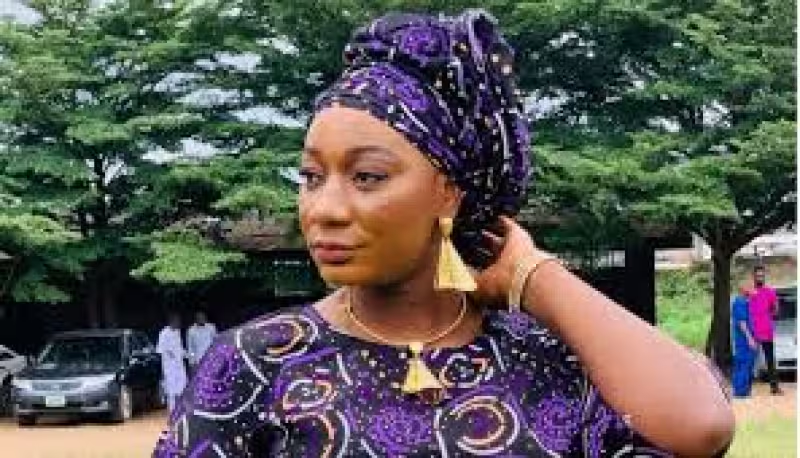
A purported intimate video involving Eniola Sisi Alagbo and two others began trending online on Tuesday, and the Ibadan-based herbal practitioner posted a public apology on her Facebook page on Wednesday.
Alagbo addressed the circulation of the clip directly to her more than 371,000 Facebook followers, saying in a post that she owned her errors and was asking for mercy. "I own my mistakes and I apologize with all sincerity of the video circulating online," she wrote, adding a plea that captured the blunt personal cost of the leak: "Pls don’t condemn me or castigate me am already passing through a lot, I can’t eat or sleep for days even sleeping meds aren’t working for me anyone longer."
The scale of the reaction matters because Alagbo uses the platform as part of her livelihood. She told followers, "This is a great phase for me and I pray for God forgiveness and my fans forgiveness, please let’s move on pass this because this media is where I get little support to feed." Those lines underline why the video’s spread has immediate consequences: it touches both reputation and income for someone who markets fertility, infection and men’s wellness products online.
Context for the apology is straightforward. Eniola Sisi Alagbo is an Ibadan-based herbal practitioner known to sell products aimed at fertility, infection and men’s wellness. Her Facebook page — where the apology appeared — counts over 371,000 followers. The post prompted mixed reactions, with some users condemning the leaked clip and others urging the public to stop circulating it.

The apology itself contains a stark tension. On the one hand, Alagbo asks for forgiveness and for people not to share the material; on the other, she frames the platform that carried the clip as a vital source of modest support. She pleaded explicitly with followers not to escalate her distress: "Please forgive me i don’t want to injure myself it’s only little strength i have." That admission of fragility sits uneasily next to the reality that the video was already spreading across social networks.
Her post also described the immediate physical toll: "I can’t eat or sleep for days," she said, and she told followers that even sleeping medication had not helped. Those sentences make the consequence concrete: beyond reputational damage, the leak has produced a measurable effect on her wellbeing. Her public appeal combined accountability — "I own my mistakes" — with an urgent request for relief from public condemnation.
The mixed public reaction after her Wednesday message shows the fault line most such stories expose: some people demand accountability for private actions made public, while others argue that further circulation of the clip only deepens harm. For Alagbo, whose business and audience are intertwined with her online presence, the debate is not abstract. She asked directly for a reprieve, tying forgiveness to the practical need for support: "this media is where I get little support to feed."
What happens next is already implied by her post: she has asked followers and the wider public to stop sharing the material and to forgive her, framing that response as essential to her health and livelihood. Her Wednesday apology leaves little ambiguity about her position — she owned the mistake, pleaded for mercy and warned that continued exposure was pushing her toward breakdown. Whether the online audience respects that appeal will determine whether the immediate harm eases or intensifies, but her message is clear and final: she has apologised, asked for forgiveness and begged that people stop circulating the video.