




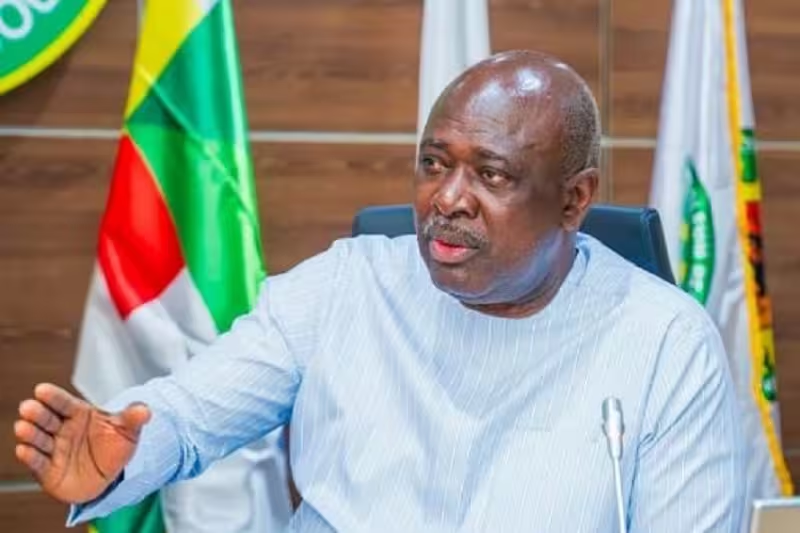
Senator Heineken Lokpobiri, Nigeria’s Minister of State for Petroleum Resources (Oil), said on his official X handle that reforms in the country’s oil and gas sector are drawing growing international attention after he received a high‑level Japanese delegation led by Kobayashi Takayuki.
Lokpobiri framed the visit as a clear signal of Japan’s interest. "Our reforms are drawing global attention and the world is responding. I had the honour of receiving a distinguished delegation from the Government of Japan, led by Kobayashi Takayuki, Member of the House of Representatives and Chairperson of the Policy Research Council of the Liberal Democratic Party of Japan," he wrote.
He said the discussions with the delegation focused on deepening collaboration and reinforcing shared strategic interests in energy development. "Japan’s interest is clear: stronger bilateral ties and deeper partnerships with Nigeria in the petroleum resources sector," Lokpobiri added, noting the talks centered on how both sides might expand cooperation.
Lokpobiri tied the visit to the reforms being carried out under President Bola Ahmed Tinubu’s administration, arguing the changes are already improving Nigeria’s global investment profile. "In our discussions, I reaffirmed Nigeria’s commitment to this relationship, highlighting our shared strategic interests in energy and the bold reforms undertaken in our oil and gas industry under President Bola Ahmed Tinubu’s administration," he said, and described those reforms as having "enhanced transparency, strengthened regulatory frameworks, and positioned Nigeria as one of the most competitive energy investment destinations in the world."

The minister returned repeatedly to momentum and expectation. "The momentum is real. The partnerships are coming. And we are just getting started," he wrote, presenting the Japanese delegation’s visit as part of a larger push to convert policy change into foreign engagement and investment.
The visit, disclosed on Lokpobiri’s X handle in 2025, is presented in official comments as part of renewed engagement between the Government of Japan and Nigeria on petroleum resources. That framing places this meeting squarely in the context of ongoing reforms and signals Tokyo’s willingness to explore deeper ties with Abuja in the energy arena.
The clearest tension in the account is procedural: interest at the diplomatic level does not automatically produce commercial deals. Lokpobiri described improved transparency and stronger rules, and he emphasized mutual interest; the next step — how Japanese interest translates into concrete projects, investment commitments or long‑term contracts — was not detailed in his public message.
What readers should watch next is whether high‑level interest evolves into formal partnerships and investments. For now, the facts on the record are that Nigeria’s oil and gas reforms under President Bola Ahmed Tinubu have attracted a prominent Japanese delegation led by Kobayashi Takayuki, that discussions focused on deepening collaboration in energy development, and that the Nigerian minister publicly signaled confidence the diplomacy will convert into partnerships.
That declaration — "The momentum is real. The partnerships are coming. And we are just getting started" — is both a claim and a roadmap. If Nigeria’s regulatory changes hold and follow‑through meetings produce tangible agreements, the visit will have been an early, public marker of a broader shift in international engagement with the country’s petroleum sector.