




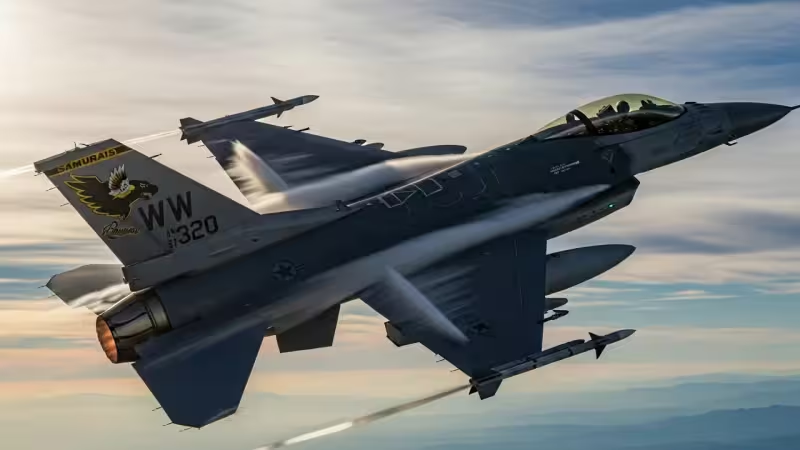
The 35th Fighter Wing marked a new chapter at Misawa Air Base in Japan on April 24, 2026, as U.S. Air Force Lt. Gen. Joel Carey delivered remarks at a ribbon-cutting ceremony that launched the F-35 era at the base. The wing also welcomed its first fifth generation USAF F-35 to Misawa that day.
The move matters because the 35th Fighter Wing is the U.S. Air Force’s forward presence at Misawa under Pacific Air Forces, where it is charged with projecting airpower, deterring aggression and supporting allied operations across the Indo-Pacific. Its primary aircraft has long been the F-16 Fighting Falcon, a multirole fighter used for air-to-air combat and air-to-ground missions, but the arrival of the F-35 signals a shift to a newer aircraft built around advanced avionics, precision-guided weapons and modern radar systems.


Misawa Air Base already hosts joint operations with the Japan Air Self-Defense Force, and the wing’s pilots and support personnel regularly train in exercises designed to simulate real-world combat scenarios. Those drills, along with multinational exercises and operations, are part of the reason the wing is seen as a contributor to peace and stability in the Indo-Pacific rather than simply a local air unit.
The transition to the F-35 does not change the wing’s basic role, but it raises the stakes for how quickly its crews adapt to a more advanced platform while keeping the mission moving. The real test now is whether the 35th Fighter Wing can fold the new aircraft into its existing combat, alliance and disaster-response duties without losing the readiness that has defined its mission at Misawa.