



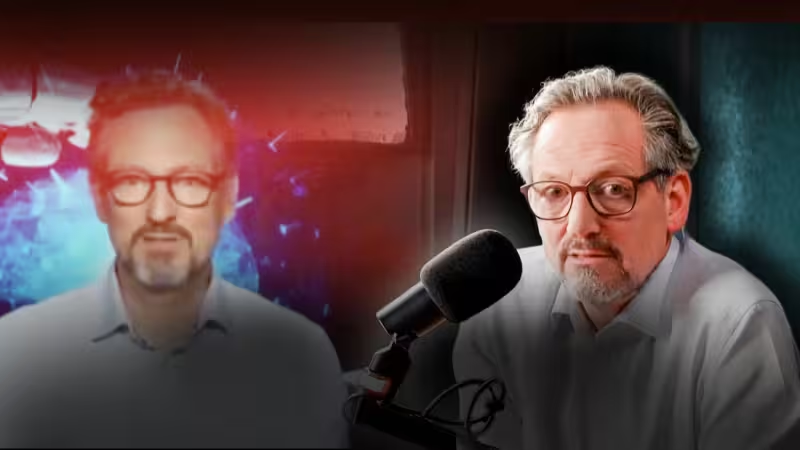
Eckart von Hirschhausen, one of the best-known faces of the ARD, has spent years fighting a fraud that uses AI to graft his face and voice onto fake advertising videos selling bogus health products.
The deepfakes have been used in criminal campaigns to peddle slimming pills, potency drugs and diabetes medicines that promise miracle cures, victims and broadcasters say. Hirschhausen told a WDR doku that he was given exclusive behind-the-scenes access to the system that turns those imitations into money, and he appears in the first episode of ZAPP’s new videopodcast "Flugmodus," where Konstanze Nastarowitz interviews him about the scam.
The scale is not hypothetical: SWR listings and reporting say new research shows fake advertising videos using Hirschhausen’s face and voice keep appearing on the internet, and that those videos are part of a global fraud industry. For years, criminals have relied on AI-generated deepfakes of Hirschhausen for fraud; the videos have repeatedly reappeared despite his private efforts to stop them.
That persistence matters today because German broadcasters are exposing how the fraud operates just as freely available tools make it trivial to create deceptively real fake content, according to an article on radioeins. The broadcasts are timed: SWR’s "Impuls" listed the Hirschhausen item on 4.5.2026, and SWR Kultur schedules a repeat for 5.5.2026 at 8:30 Uhr. ZAPP’s new series launches with the conversation about the scam — a public airing that could widen awareness of how the deepfakes are monetized.
There is a public-policy angle tightly connected to the programming. The radioeins reporting says the German government wants to take tougher action against digital violence, and civil-society groups are already campaigning for stronger protections. Collien Fernandes, who made the documentary "F*ck Deepfakes!" and has been dealing with deepfakes and digital violence for years, is pressing for stricter laws and better victim protection; she warned that this is an issue everyone will face and that broad public education is urgently needed, saying in German: "Das ist etwas womit wir alle zu tun haben. Und die, die damit noch nichts zu tun hatten, die werden damit in Zukunft zu tun haben. Und deswegen halte ich eine breite Aufklärung für wahnsinnig wichtig, weil es ja nicht nur um die sexualisierten Deepfakes geht. Es geht nicht nur um die Betrüger und Betrügerinnen, die damit Quatsch machen, sondern all das kann auch unsere Demokratie gefährden."
The tension is simple and sharp: Hirschhausen fought the scam privately for years, then agreed to take part in a WDR documentary and the ZAPP episode to expose the machinery behind it — yet despite that access and exposure, SWR’s own listing warns that the fake ads keep appearing. At the same time, freely available AI tools lower the barrier for criminals to clone a public figure’s image and voice, turning celebrities into repeated targets and ordinary people into unlikely vectors for fraud.
What happens next is immediate and predictable: the WDR doku material and ZAPP conversation will push the case into public view this week, and that attention will amplify pressure on lawmakers and platforms. Given that the government has expressed a desire to act and that activists and organizations are campaigning for tougher measures, the most likely outcome is faster policymaking and enforcement focused on digital violence and fraudulent deepfakes.
In short: public exposure via broadcasters — not private requests alone — appears to be the lever that can force change; Hirschhausen’s decision to go on camera and show what he learned is the moment that will make political and legal responses harder to ignore.