



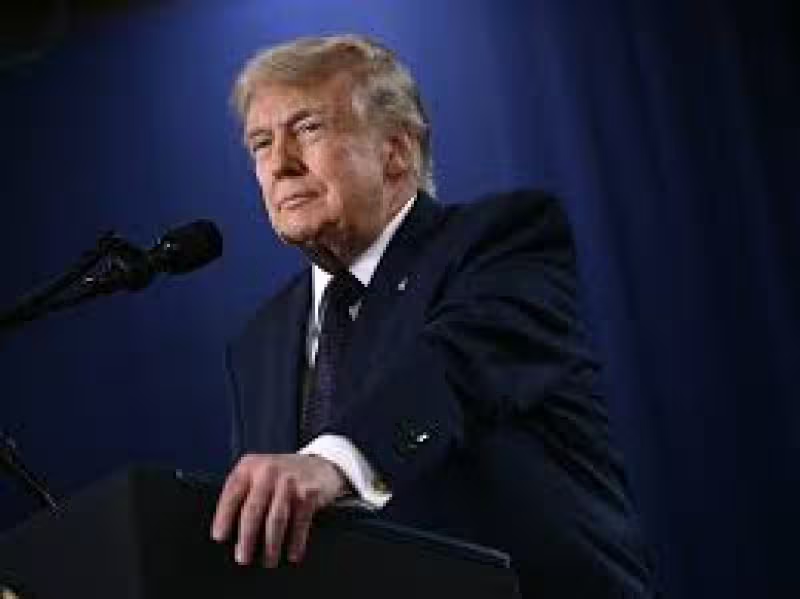
Donald Trump said on Sunday he had instructed negotiators "not to rush into a deal" with Iran, calling talks "constructive" while warning that "both sides must take their time and get it right." He also wrote that an agreement had been "largely negotiated" and described it as a memorandum of understanding.
The comments followed parallel signals from Tehran. Esmail Baghaei told state television on Saturday that Iran was "very close and very far" from reaching an agreement and was "in the process of finalising a memorandum of understanding" that would allow additional talks over a final accord.
Those twin public statements, paired with reporting by US media that the mooted deal is not a final settlement, left the outlines of any deal thin but consequential: negotiators have reportedly sketched a 60-day ceasefire and discussed reopening the Strait of Hormuz — a waterway through which around 20% of the world's oil and liquefied natural gas travels — while leaving sanctions relief, frozen funds and Washington's demands on Iran's nuclear programme to be negotiated later.
The recent history that brought negotiators to this point is stark. On 28 February the US and Israel launched wide-ranging strikes on Iran. Iran responded by striking Israel and US-allied states in the Gulf and effectively closing the Strait of Hormuz, a move that sent oil prices soaring globally. A ceasefire was agreed in early April; shortly afterward the US established a blockade of Iranian ports. Trump said the blockade "would remain in full force and effect until an agreement is reached, certified, and signed."
Administration figures framed the status of talks cautiously. Secretary of State Marco Rubio told reporters progress over the weekend was "significant" but "not final," and hinted that developments in the past 48 hours could lead to a "completely open strait... without tolls." Some US media reports suggest the deal could eventually see Iran hand over its highly-enriched uranium; Iran is thought at the start of the war to have had about 440kg of uranium enriched up to 60% purity.



The public response in Washington was sharply divided. Senator Ted Cruz warned the proposal would be "a disastrous mistake." Senator Roger Wicker said a 60-day ceasefire would mean "everything accomplished by Operation Epic Fury would be for naught!" Representative Mike Lawler took a different tone, saying the administration has managed to "force the remnants of this regime into a negotiation, a real negotiation."
That split captures the central tension: negotiators on both sides appear to have reached something short of a final settlement — a memorandum that would set the stage for more talks while leaving the most consequential items unresolved. According to the available accounts, the reported deal would leave the scope and timing of Iranian sanctions relief to be negotiated later, the release of frozen Iranian funds to be negotiated later, and Washington's demands for Iran to curb its nuclear ambitions to be negotiated later.
On the matter of nuclear intent, the competing public claims remain direct. Trump wrote on Truth Social that Iran "must understand" it "cannot develop a nuclear weapon," while Iranian President Masoud Pezeshkian told state TV that Iran was ready "to assure the world that we are not after a nuclear weapon."
The practical effect of the current posture is immediate: a memorandum of understanding, if it exists, would not remove the blockade and would not yet open the Strait of Hormuz on its own. The blockade, Trump has said, stays in place until an agreement is signed and certified. The reported 60-day ceasefire, meanwhile, would pause fighting but leave the most explosive questions — sanctions, frozen funds and nuclear restrictions — to future negotiation.
The single question now sharpened by events is whether a memorandum of understanding that both sides call only a step will be translated into a binding final deal that resolves sanctions relief, frozen funds and nuclear limits while actually reopening the strait and ending the blockade; until that happens, the memorandum will be a diplomatic stopgap, not the solution its proponents say it could become.