




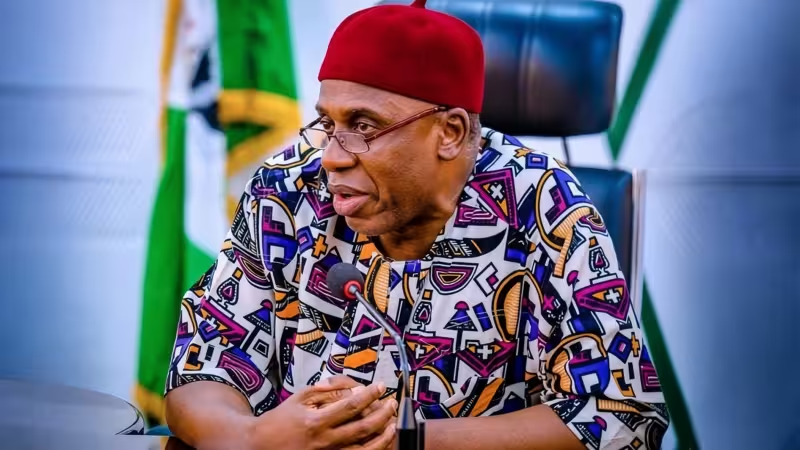
Rotimi Amaechi was declared the winner of the African Democratic Congress (ADC) presidential primary election in Bayelsa State on Tuesday, the returning officer said at the party’s collation centre in Yenagoa.
Commodore Promise Dappa, who served as the chairman and returning officer for the Bayelsa exercise, announced the result at the ADC Collation Centre, saying: "By the powers conferred on me as the Chairman of the presidential primary election in Bayelsa State and also the Returning Officer of the Presidential Primary election in the state, I hereby do declare Chibuike Rotimi Amaechi as the winner of the ADC Presidential Primary election in Bayelsa State having polled the highest number of votes in the state." The numbers released with the declaration showed Amaechi with 44,404 votes, Atiku Abubakar with 6,570 votes and Mohammed Hayatu-Deen with 939 votes.
The Bayelsa exercise, held across 105 wards and eight local government areas on Monday, recorded 56,356 registered voters, of whom 53,298 were accredited. Officials counted 51,913 valid votes and 1,785 rejected ballots.
Those totals feed into a national collation that is taking place in Abuja, where the party has said results from across the country are expected. The Bayelsa count is notable for the scale of the margin: Amaechi’s 44,404 votes outpaced his nearest rival in the state by nearly 38,000 votes, a gap the returning officer cited in making the declaration.



The declaration did not end dispute. Amaechi publicly rejected the wider set of ADC primary results announced elsewhere, saying the process had not been free, fair or transparent and that he would not accept outcomes that did not reflect the party’s stated values. He said many party members had been prevented from voting and accused elements of the process of disenfranchising supporters. "There’s no way that about eighty percent of members of the party were not allowed to vote, and you expect me to accept such results," he said, arguing the party should not engage in the same kinds of electoral malpractice it criticizes.
Those concerns were echoed by Mohammed Hayatu-Deen, who told party officials and the public on Tuesday that he would not attend the announcement of the ADC presidential election results. Hayatu-Deen said he was "concerned by reports from across the country of widespread vote rigging, some of which I myself observed," and that he would be taking advice on how to proceed.
The tension underscores a gap between the party’s earlier description of the primaries as transparent and democratic and the accounts of candidates who say significant numbers of members were excluded. The Bayelsa figures are clear on paper — tallies of registered, accredited and valid voters — but the complaints raise practical questions about how those figures were reached in some locations.
The most consequential unanswered question now is whether the ADC’s national collation in Abuja will produce a result the party’s leadership and its rival candidates accept. If the nationwide outcome mirrors the Bayelsa declaration in scale but is paired with the same allegations of disenfranchisement, the party faces a test of whether its internal process can withstand public rejection by its own contenders.