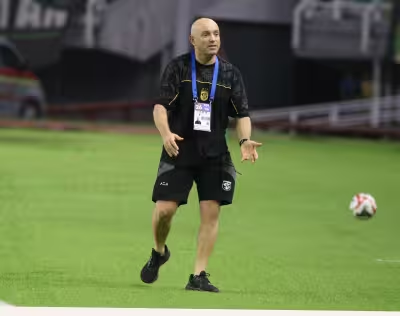





Chelsea will explore Marco Silva’s availability by reaching out to his representatives this summer after the club began compiling a shortlist following the sacking of Liam Rosenior last week, people briefed on the search said.
Silva, the Fulham manager, is out of contract this summer and is now one of the names Chelsea intend to check as they build a three-man manager search. Fulham sit 10th in the Premier League table on 48 points; Chelsea are level on 48 points but sit eighth, a gap Chelsea officials see as part of the context for their rebuild.
The early shortlist is short and sharp. Andoni Iraola features prominently on Chelsea’s early list of contenders, and Xabi Alonso is also one of the candidates the club will probe. Those three — Silva, Iraola and Alonso — are the initial leads Chelsea will test while they insist they will not rush the appointment and plan a robust recruitment process.
The numbers underline why the position matters. Both Fulham and Chelsea are on 48 points heading into the run-in, and Chelsea’s hierarchy framed the managerial decision as central to their bid to improve a team that sits in eighth place. Last week’s dismissal of Rosenior after only three months in charge triggered the decision to open a formal, measured search for a permanent head coach.


For Silva personally, the moment is immediate. He is out of contract this summer and, according to people familiar with Fulham’s thinking, his future at the club is in some doubt: some senior figures at Fulham remain confident that Silva will sign a new contract, while others are less convinced he will extend his stay. That division inside Fulham is the clearest immediate friction point for Chelsea’s plan to make contact.
Chelsea will reach out to Silva’s representatives to establish whether he would consider the job, with club officials making clear they will balance speed with due diligence. They have told agents and scouts to assemble information on each candidate and to treat this as a proper recruitment exercise rather than an emergency hire — a stance that matters because the club expects the next appointment to be more than a short-term fix.
The tension in the story is simple: Silva is available on paper this summer, but his likely response depends on Fulham’s ability to convince him to stay and on how persuasively Chelsea can sell a long-term project. There are competing signals inside Fulham — confidence from some senior figures that a new deal will be agreed, skepticism from others — and Chelsea cannot assume availability even though Silva’s contract situation makes contact permissible and inevitable.
What happens next is predictable in process but uncertain in outcome. Chelsea will phone agents and representatives to probe interest and availability, run the three-man search they have set up, and weigh Iraola and Alonso alongside Silva. The club has said publicly it will not rush. For Fulham, the coming weeks are a test: either they convince Silva to sign a new deal, ending speculation, or they prepare for an active recruitment process of their own should he choose to leave.
The most consequential question now is which of those two paths will win out: will Silva accept fresh talks with Chelsea as a genuine option, or will Fulham’s internal supporters persuade him to commit to the club for the next phase? Chelsea’s promise of a robust recruitment process suggests they will only push hard if a concrete opening appears; until then, the story will hinge on the private conversations between Silva and his representatives.