




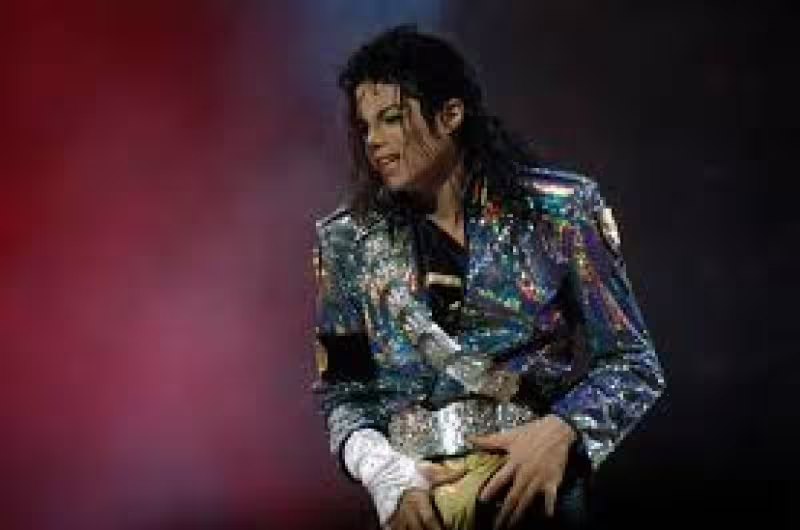
The Michael Jackson biopic Michael opened on Wednesday and has taken $217m globally since its release, registering the highest worldwide opening weekend ever for a biopic.
Adam Fogelson, a studio executive, framed the haul as proof the film is playing across demographics: "You don't deliver this figure unless you're seeing huge numbers across every conceivable demographic. [Audiences] are clearly having a blast." The weekend total tops the $180m worldwide opening once set by Oppenheimer in 2024 and eclipses the $124m opening that made Bohemian Rhapsody the record-holder for a musical biopic in 2018.
The financial milestone sits beside a sharp split in reception. Rotten Tomatoes recorded a 38% average score from critics and a 97% average rating from audiences, a divide that matches the film's clear commercial promise and critical disdain.
Context behind the release helps explain both the box-office surge and the critical pushback. Michael was financially backed by Michael Jackson's estate and uses Jackson's original vocals in its musical numbers. The film was reworked and reshoots took place after the discovery of a historic non-disclosure agreement; producers removed the references that had once been planned to address allegations against Jackson. The finished movie ends in 1988 — before any accusations were made — and does not include any mention of the child sexual abuse accusations that later shadowed Jackson's life and career.



Over the opening weekend, director Antoine Fuqua described the period after the NDA discovery as a "tough period," an acknowledgement of the upheaval that reshaped the picture. The primary review of Michael was blunt; among its lines: "It's bad. It's bad. It's really, really bad." That same review accused the film of excising anything "that might be deemed contentious" and, as a result, anything "that might be deemed dramatic." It went on to say the movie "stops in the mid-1980s" and that Janet Jackson was written out completely, and noted the film was produced by several of Jackson's relatives and close associates.
The tension is immediate: a film that refuses to reckon with later accusations has become, for many viewers, a crowd-pleasing celebration of talent — and for many critics, a sanitized portrait. The primary review even quoted lines that underscore the film's tonal choices: "Remember your family, Michael!" and, in another scene cited by the review, "They're not my pets, they're my friends," details that the reviewer used to argue the picture prefers affection to interrogation.
What happens next matters to both the business and the story of Jackson's image. Michael is scheduled for release in the United Kingdom on 22 April and in the United States on 24 April; the global receipts already recorded will put studios and backers in a strong position to press for further franchise plans. The film has already been linked to future projects and, after such an opening and overwhelmingly positive audience scores, the estate and producers will have an incentive to continue shaping Jackson's cinematic legacy — a possibility the film itself hinted at when it ended at 30 and suggested sequel plans.
Put plainly: Michael's record-setting start shows that mass audiences will reward a celebratory, estate-backed retelling that leans on original music and star power, even when critics call the result a bland, daylight-ready portrait that avoids the thorniest parts of the story. The box office answer is clear — for now, people are choosing the party over the argument.