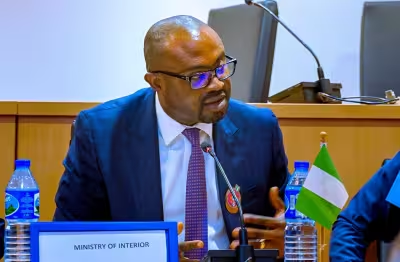


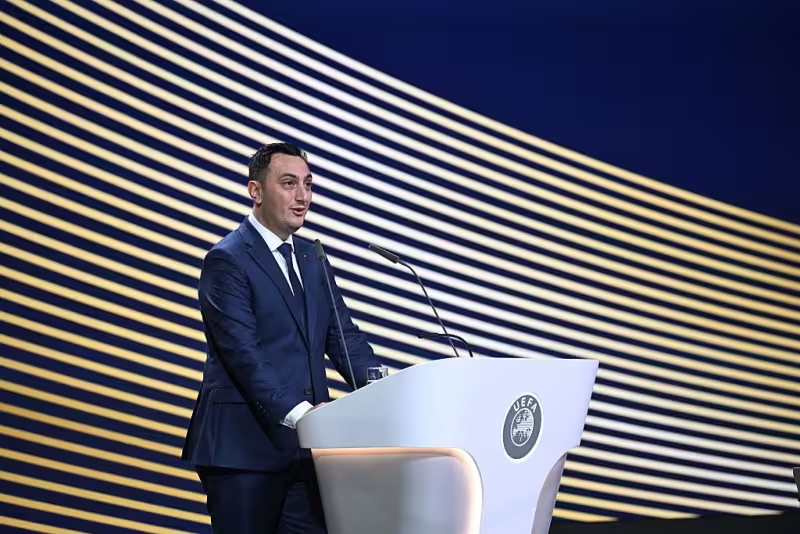
Glenn Micallef told members of the European Parliament on April 29 that he will not attend the Venice Biennale opening on May 9 because the organizers decided to invite Russian participation. He said he had hoped to "celebrate Europe Day there with the Italian cultural sector, which I deeply love and admire," but that "as long as Russia and the Russian authorities continue to be invited, while Ukrainian people continue to be targeted, and attacked on a daily basis, I cannot be present."
The protest from Micallef is the latest public rebuke since March, when he co-signed a condemnation of the Biennale organizers for inviting Russia. That condemnation helped prompt the European Commission to begin a process to suspend a two million euro grant to the Foundation that organizes the Venice Biennale.
On April 23 a Commission spokesperson warned that if the Foundation’s response is not satisfactory the grant can be terminated, and the spokesperson said none of the two million euros has been disbursed so far. The Foundation has until mid-May to answer the Commission’s letter — a deadline that now sits between the dispute and the Biennale’s May 9 opening.
The formal diplomatic pressure on the Biennale has been broad. A letter signed by 22 countries urged the organizers to stop Russia’s participation, describing Moscow’s attacks on Ukrainian cultural sites as "systematic" and warning that "granting Russia a prestigious international cultural platform sends a deeply troubling signal." Separately, Ukraine has sanctioned five people involved in the Russian pavilion for their ties to some of the largest companies said to be fueling Moscow’s war machine.
Those figures and statements form the immediate weight of the story: a well-known cultural event, a high-profile boycott by a cultural official, a multi-country diplomatic appeal, sanctions targeting five people, and a potential suspension of a two million euro grant that has not yet been paid.
Context matters: the criticism of the Venice Biennale is directly tied to the war in Ukraine and allegations that Russian state or commercial networks have been involved in damage to Ukrainian culture and heritage. The decision to allow Russian participation has turned an art festival into a diplomatic flashpoint, with national governments, cultural leaders and international institutions all involved in the response.
The tension is blunt and immediate. Organizers invited Russian participants even after public condemnation in March and a 22-country letter that used the word "systematic" to describe attacks on Ukrainian cultural sites. The European Commission has opened a formal review of its grant and warned on April 23 that it can terminate funding, yet the Foundation still has time — until mid-May — to respond. Meanwhile, the Biennale’s calendar remains unchanged and the May 9 opening approaches.
Micallef framed his decision as personal and principled: he said he would have liked to join Europe Day celebrations with the Italian cultural sector but cannot be present while Russian authorities are invited and Ukrainians are being attacked daily. His withdrawal follows the March condemnation he co-signed and adds the voice of an individual official to the broader diplomatic pressure already mounted by 22 countries and the Commission.
The single most consequential unanswered question is whether the European Commission will act on its warning and terminate the two million euro grant before the Biennale opens on May 9. The Foundation’s reply by mid-May will determine whether the funding is halted — and whether that step alters the event’s course or the wider cultural debate over inviting Russian participation at a moment when many governments and individuals view such invitations as politically and morally fraught.