





Peter Obi confirmed on Sunday afternoon that he is leaving the African Democratic Congress, saying the party has become consumed by endless court cases, internal battles, suspicion and division. The move comes after days of fresh speculation about opposition realignments ahead of 2027.
Obi said his decision was not a rebuke of Senator David Mark, Alhaji Atiku Abubakar or any other respected leader. “Let me state clearly: my decision to leave the ADC is not because our highly respected Chairman, Senator David Mark, treated me badly, nor because my leader and elder brother, Alhaji Atiku Abubakar, or any other respected leaders did anything personally wrong to me. I will continue to respect them,” he said.
He then turned the criticism toward the political climate around the party, arguing that the same Nigerian state and its agents that created “unnecessary crises and hostility” in the Labour Party had now found their way into the ADC. Obi said that instead of focusing on deeper national problems, politics was being driven by control and exclusion. He added that he is “eager to see a Nigeria that works for its citizens.”
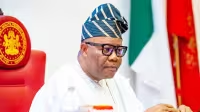
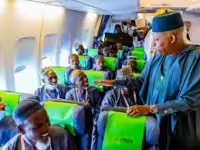

The exit lands with added weight because Obi was the Labour Party presidential candidate in the 2023 election and remains one of the most closely watched figures in the opposition space. On Saturday, one report said he and Rabiu Kwankwaso would leave the ADC, but Kwankwaso later pushed back, saying no final decision had been taken about his political future. Another report said the pair were expected to join their followers in the NDC in the coming days, even as the Independent National Electoral Commission’s May 10 deadline for registered parties to submit membership registers draws near.
The timing also matters because the ADC leadership fight is still tied up in court. The Supreme Court on Thursday voided a Court of Appeal ruling in the leadership crisis and sent the faction led by David Mark back to the Federal High Court. Obi’s public break now sharpens the uncertainty around a party already being pulled by litigation, rival claims and the pressure of election-season positioning.
Obi ended by setting out the politics he says he wants to pursue. “I am not desperate to be president, vice-president, or senate president,” he said. “I am desperate to see a society that can console a mother whose child has been kidnapped or killed while going to school or work. I am desperate to see a Nigeria where people will not live in IDP camps but in their homes. I am desperate for a country where Nigerian citizens do not go to bed hungry, not knowing where their next meal will come from.” That makes the answer to the question hanging over his exit plain enough: he is leaving because he sees the ADC turning into the kind of political battleground he says Nigerian voters are already trying to escape.