




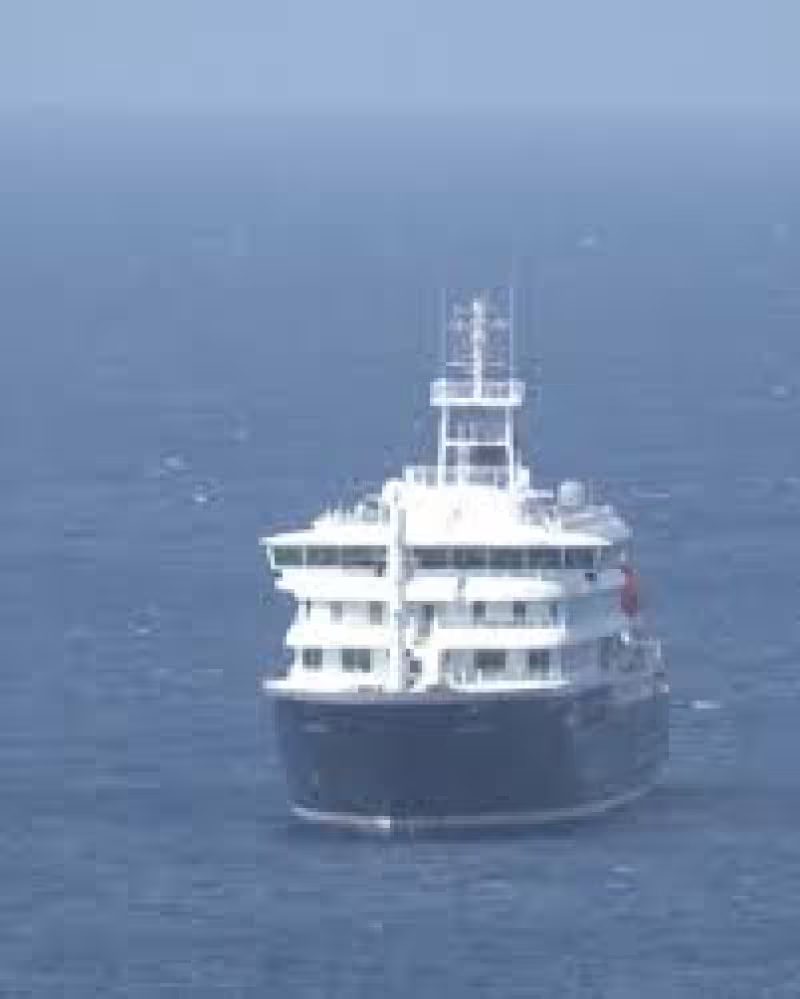
A suspected hantavirus outbreak on the Dutch-flagged MV Hondius has killed three people and sickened at least three others while the vessel sits off the coast of Cape Verde, the World Health Organization and South Africa’s Department of Health said on Sunday.
The first victim was a 70-year-old man who died on the ship; his body was removed in the British territory of Saint Helena. South African authorities later said the man’s wife collapsed at an airport in South Africa. WHO said at least one case of hantavirus had been confirmed and that one patient was being treated in intensive care in a South African hospital.
WHO said two other people on board who showed symptoms were being worked on for evacuation and that the two sick people who required urgent medical care were crew members. Local authorities in Cape Verde had not allowed anyone to disembark while the investigation continued, and WHO said it was supporting response efforts on the vessel.
“WHO is aware of and supporting a public health event involving a cruise vessel sailing in the Atlantic Ocean,” the agency said. “Medical care and support are being provided to passengers and crew.”
The MV Hondius left Argentina around three weeks earlier on a voyage that was due to head toward Spain’s Canary Islands. Officials have said the cruise’s itinerary included multiple stops before reaching the waters off Cape Verde, where the vessel has remained while health authorities assess the situation.
Authorities reported three deaths and at least three additional sickened people in the suspected outbreak. WHO said sequencing of the virus is under way and that detailed investigations, including further laboratory testing and epidemiological work, are ongoing.
Hantaviruses are typically found worldwide and are spread mainly by contact with the urine or feces of infected rodents such as rats and mice. WHO noted that hantavirus infections can also be spread between people, although human-to-human transmission is rare.
There is no specific treatment or cure for hantavirus infection; WHO emphasized that early medical attention can increase the chance of survival. That warning framed the urgency around evacuating those who showed symptoms and ensuring infected persons receive hospital care.
The current situation presents a logistical and public-health friction: authorities must move symptomatic people off a ship that has been prevented from disembarking passengers, while confirming whether infections originated from rodent exposure aboard or from person-to-person spread. WHO said it was coordinating with national authorities as those assessments proceed.
“Detailed investigations are ongoing, including further laboratory testing, and epidemiological investigations,” WHO said, adding that sequencing of the virus is also ongoing. Those steps will be central to determining how the outbreak began and what containment measures are required.
The immediate priorities are clinical care for the sick—one of whom is in intensive care—and safe evacuation of the two symptomatic crew members WHO said were identified for urgent medical attention. How quickly those evacuations can be completed, and whether additional cases emerge among passengers or crew, will shape the public-health response in the days ahead.
For people on board and authorities ashore, the most consequential question is whether the combination of shipboard care, hospital treatment in South Africa, and ongoing laboratory work will be enough to prevent further spread. WHO and South African health officials have said they are working on those precise tasks as investigations continue.
The suspected outbreak on the MV Hondius underscores the particular vulnerability of ships to infectious disease events and the hard choices officials face when a vessel is at sea: balancing immediate medical needs against the risks of spreading infection ashore. The outcome of the current evacuations and the results of sequencing and epidemiology will determine how large a public-health problem this becomes.