



President Bola Tinubu on Tuesday called for national unity in his 2026 Eid-el-Kabir message, urging Nigerians to reflect on sacrifice, love and compassion as the country prepares to mark the festival. He said his government remained committed to building a Nigeria where all citizens can live in peace, worship freely and pursue their dreams without fear.
Tinubu said the past three years of reform had been difficult but necessary, arguing that the sacrifices already made had helped produce a more stable economy and made Nigeria a preferred investment destination that would drive jobs and growth. He said the benefits would continue to show in improved security and broader opportunities, even as he warned that terrorists and bandits still attack some communities despite the work of security and intelligence agencies.
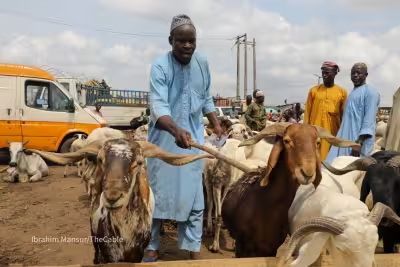
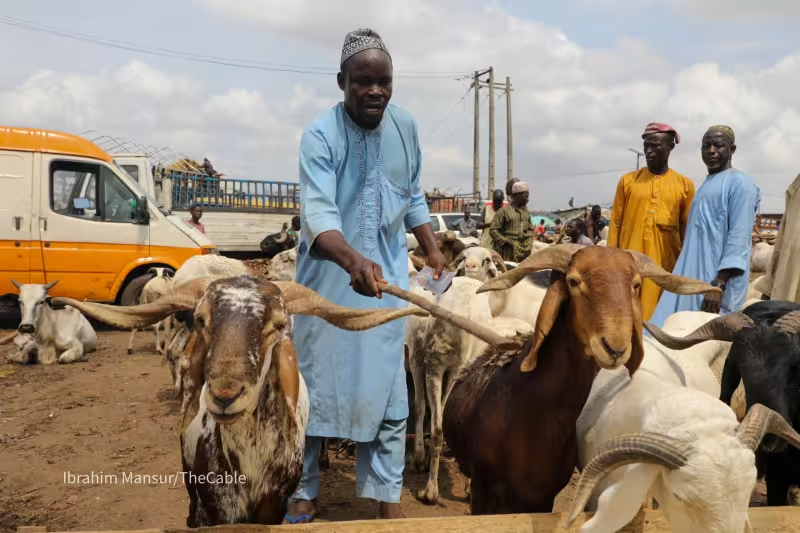
The president tied his appeal to the religious meaning of eid el kabir, saying the festival’s central lesson is mercy and compassion regardless of race, ethnicity or creed. He pointed to Prophet Ibrahim’s willingness to offer Ismail as a sacrifice to Allah as an example of duty and devotion, and urged Muslims to pray for Nigeria, for peace in their communities and for wisdom for those in leadership.



He also directed Nigerians to reach out to the less privileged, share with neighbours and strengthen the bonds of brotherhood. Tinubu said those committing crimes should rethink their actions and abandon their evil ways or face the full weight of the law, while adding that Nigerians were neither abandoned nor forgotten and that the government would ultimately defeat the forces of evil.
The Federal Government separately declared Wednesday, May 27, 2026 and Thursday, May 28, 2026 as public holidays for Eid ul Adha. Olubunmi Tunji-Ojo announced the holidays in a statement signed by Magdalene Ajani, describing the festival as one of deep spiritual significance, while Senator Barau I. Jibrin also urged Muslims and all Nigerians to pray for peace, unity and the country’s progress.
Barau said believers should use the season to uphold sacrifice, obedience, tolerance, justice and charity, and to support the poor and vulnerable. His message echoed Tinubu’s call for a more united country, but it also showed how the holiday’s familiar language of devotion and giving is landing against a harder national backdrop: a government still trying to prove that reform can bring both relief and security.
That is the test now. Nigeria enters Eid-el-Kabir with a public holiday, a presidential message about renewal and a security picture that remains unsettled, and the next measure will be whether the calls for sacrifice and unity are followed by visible calm in the weeks ahead.