




Chelsea beat Manchester United 6-5 in the final at Brentford's Gtech Community Stadium on Saturday, May 30, to win the United Kingdom's first World Sevens Football tournament.
Fans searching for where to watch live football this weekend found every kick on Sky Sports: the three-day event ran from Thursday, May 28, through Saturday and was shown live across the country as eight WSL and WSL2 teams competed for the trophy.
The final produced 11 goals and a finish few will forget. Chelsea fell behind early, trailed 4-1, and still managed to lift the title after a sequence of late strikes. Aggie Beever-Jones scored the equaliser with just over two minutes remaining and then volleyed home the winner in the final 20 seconds to complete a remarkable turnaround that finished 6-5.
The scale of the comeback underlines why this result matters now: Chelsea had been outpaced for long stretches, drew level 4-4 by halftime after trailing by three, and then watched Manchester United regain a lead after the restart before mounting the decisive rally. The scoreline says the game was tight; the timing of Beever-Jones's goals says it was not routine.

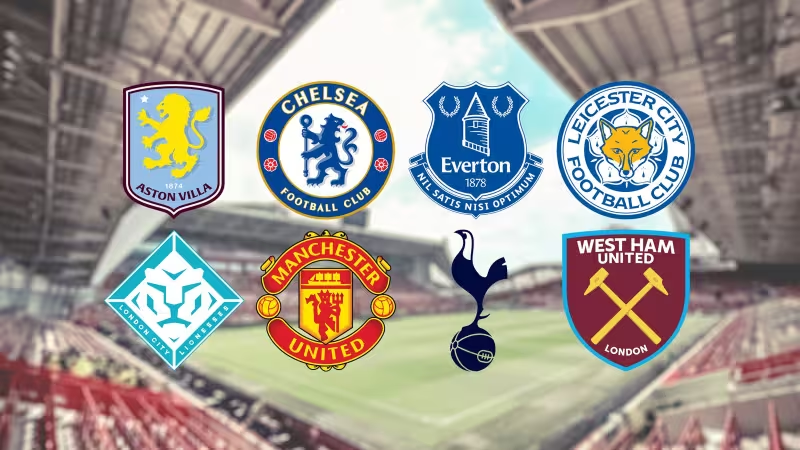
Evidence of the tournament's scope came through the weekend beyond the headline. Eight teams were split into two groups — Group 1 featured Chelsea alongside London City Lionesses, Everton and Leicester while Group 2 contained Manchester United, Tottenham, Aston Villa and West Ham — with the top two from each group advancing to the semi-finals and then the final.
World Sevens is a seven-a-side format with 30-minute matches divided into two 15-minute halves, a five-minute half-time break, and rules designed for rapid substitutes and end-to-end play; the England staging marked the third World Sevens overall after earlier editions in Estoril, Portugal, and Fort Lauderdale, Florida, USA, won by Bayern Munich and San Diego Wave respectively.
The friction in the narrative is obvious: Chelsea conceded first, were 4-1 down and faced a United side that repeatedly pulled ahead, yet they still recovered to win. That gap — how a team overturns a three-goal deficit in a condensed, high-tempo seven-a-side match — is the question left hanging after the final whistle. Tactical tweaks, a flurry of finishing, or moments of defensive lapse could explain parts of it, but the match hinged on two late strikes from one player.
Aggie Beever-Jones was the pivot. Her equaliser with just over two minutes left shifted momentum in Chelsea's favour; her second, inside the final 20 seconds, ended the contest and denied Manchester United a triumph they had looked to control for long stretches. The finish gave Chelsea the title in dramatic fashion and handed the weekend to one of the tournament's breakout personalities.
The tournament's conclusion also leaves an immediate practical question: where will World Sevens go next? This English staging closed on Saturday with no announced successor host, so the location and timing of the next World Sevens remain the single most consequential unanswered detail after a weekend that demonstrated the format's capacity for compact, television-friendly drama.