




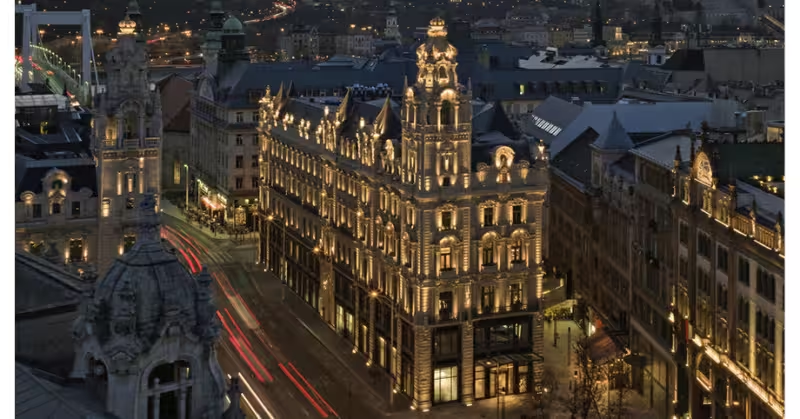
The St. Regis Budapest opened on April 28, 2026 inside the restored Klotild Palace, bringing the American luxury brand into the Neo‑Baroque heart of the Hungarian capital, and George Fleck marked the debut as a deliberate cultural fit for the city.
The hotel occupies the twin palace commissioned at the turn of the 20th century by Princess Klotild of Saxe‑Coburg and Gotha and designed by Flóris Korb and Kálmán Giergl. The property offers 63 rooms and 39 suites, including the Klotild Tower Suite and a two‑bedroom Presidential Suite that stretches over 169 square metres with a private balcony overlooking the Danube, the Elizabeth Bridge and the Citadella.
Inside, guestrooms are conceived as private theatre boxes framed with city views and a refreshment centre that recalls traditional Hungarian tile stoves; the hotel also brings St. Regis Butler Service to guests. Dining and public spaces include 99 Sushi Bar & Restaurant, Klotild Patisserie, Atrium and The St. Regis Bar.
The St. Regis Spa anchors a roster of wellness facilities: an indoor pool, a hammam, a Finnish sauna, experience showers and treatments using Sothys and Omorovicza products, alongside a fitness studio topped with a glass ceiling. Marriott Bonvoy members can redeem award nights from 88,000 points; cash rates start at about $515 per night.
George Fleck framed the opening as a natural match: he said the Astors were drawn to places where culture, society and celebration converged, and that bringing the House of Astor to Klotild Palace extends that legacy, introducing signature rituals and the brand’s renowned Butler Service to one of Europe’s storied capitals.
Klotild Palace is a Neo‑Baroque emblem of the Austro‑Hungarian Golden Age. Its 48‑metre tower, topped with enlarged replicas of Archduke Joseph Karl's crown, once marked the ceremonial entrance to Pest for travellers crossing the Elisabeth Bridge. The building’s UNESCO‑listed identity and its central location moments from the Danube help explain why the site was chosen to host a hotel intended both to showcase and to capitalise on Budapest’s historic boulevards and riverfront vistas.
That shift — from ceremonial, civic threshold to private luxury address — is the story’s tension. The palace’s public role as a gateway to the city gives way to a property focused on curated experiences: signature suites, private balconies and branded rituals. Yet the hotel also houses public offerings — restaurants, a patisserie and a bar — that keep parts of the restored palace accessible to locals and visitors alike.
For now, the St. Regis’s success in Budapest will be measured by the balance it strikes between preservation and hospitality. By reviving a Belle Époque monument, installing suites and services designed to draw international visitors, and opening dining and wellness spaces to the street, the property has chosen an approach that seeks to marry conservation with commercial life; whether that model sustains the palace’s civic presence or turns it primarily into a luxury enclave will be seen in how much of the restored public fabric remains open and in daily use.